











How does a transformer tap changer affect the power factor of a system?
In the realm of electrical power systems, maintaining an optimal power factor is crucial for efficient energy utilization and cost - effectiveness. As a leading supplier of transformer tap changers, I am often asked about the relationship between these devices and the power factor of an electrical system. This article aims to explore in detail how a transformer tap changer can impact the power factor.
Understanding the Power Factor
Before delving into the influence of transformer tap changers, it's essential to understand what power factor is. The power factor (PF) is the ratio of real power (P), which is the power that does useful work, to apparent power (S), which is the product of voltage and current in an AC circuit. Mathematically, it is expressed as (PF=\frac{P}{S}). A power factor of 1 (or 100%) indicates that all the electrical power supplied is being used for useful work, while a lower power factor implies that a significant portion of the power is being wasted in the form of reactive power (Q). Reactive power is necessary for the operation of inductive loads such as motors, transformers, and fluorescent lights, but it does not perform any useful work.
How Transformer Tap Changers Work
A transformer tap changer is a device used to change the turns ratio of a transformer. By adjusting the number of turns in the primary or secondary winding, the output voltage of the transformer can be regulated. There are two main types of tap changers: off - load tap changers (OLTC) and on - load tap changers (LTC). Off - load tap changers require the transformer to be de - energized before the tap position can be changed, while on - load tap changers can change the tap position while the transformer is in operation.


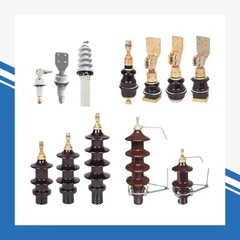
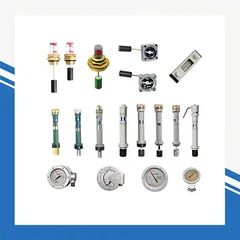
Our company offers a wide range of high - quality tap changers, including Load Tap Changers For Transformers, Auto Tap Changer Transformer, and Load Tap Changing Transformer. These products are designed to provide precise voltage regulation and reliable performance in various electrical systems.
Impact of Transformer Tap Changers on Power Factor
Voltage Regulation and Power Factor
One of the primary ways a transformer tap changer affects the power factor is through voltage regulation. When the voltage in an electrical system deviates from its rated value, it can have a significant impact on the power factor of the connected loads. For inductive loads, a decrease in voltage can cause the current to increase in an attempt to maintain the same level of power. This increase in current leads to an increase in reactive power consumption, resulting in a lower power factor.
Conversely, an increase in voltage can cause the magnetic core of inductive loads to saturate, also increasing the reactive power consumption and reducing the power factor. By using a transformer tap changer to regulate the output voltage of the transformer, the voltage supplied to the loads can be kept within a narrow range around the rated value. This helps to minimize the variations in reactive power consumption, thereby improving the overall power factor of the system.
For example, in a distribution system where there are a large number of inductive loads such as motors, the voltage at the end of the feeder may drop due to the line impedance. A tap changer can be used to increase the output voltage of the distribution transformer, compensating for the voltage drop and ensuring that the motors receive the rated voltage. This reduces the reactive power consumption of the motors and improves the power factor.
Harmonic Mitigation and Power Factor
In addition to voltage regulation, transformer tap changers can also play a role in harmonic mitigation, which in turn affects the power factor. Non - linear loads such as variable - speed drives, rectifiers, and electronic ballasts generate harmonics in the electrical system. These harmonics can cause additional losses in the system and distort the voltage and current waveforms, leading to a lower power factor.
Some advanced tap changers are designed with features such as harmonic filtering and voltage waveform correction. By using these advanced tap changers, the harmonic content in the system can be reduced, improving the quality of the voltage and current waveforms. This helps to increase the power factor of the system by reducing the non - fundamental components of the power.
Case Studies
Let's consider a real - world case study to illustrate the impact of a transformer tap changer on the power factor. A large industrial plant was experiencing a low power factor due to the presence of a large number of inductive motors and non - linear loads. The plant's electrical system was supplied by a distribution transformer with a fixed turns ratio, and the voltage at the load end was often below the rated value.
The plant management decided to install an on - load tap changer on the distribution transformer. After the installation, the tap changer was used to regulate the output voltage of the transformer to maintain a constant voltage at the load end. As a result, the reactive power consumption of the motors decreased, and the harmonics generated by the non - linear loads were also reduced. The power factor of the plant's electrical system improved from 0.7 to 0.9, resulting in significant energy savings and a reduction in the electricity bill.
Conclusion
In conclusion, a transformer tap changer can have a significant impact on the power factor of an electrical system. By regulating the output voltage of the transformer, it helps to maintain a stable voltage supply to the loads, reducing the variations in reactive power consumption and improving the power factor. Additionally, advanced tap changers with harmonic mitigation features can further enhance the power factor by reducing the harmonic content in the system.
As a supplier of high - quality transformer tap changers, we are committed to providing our customers with products that can effectively improve the power factor of their electrical systems. If you are interested in learning more about our transformer tap changers or would like to discuss your specific requirements, please feel free to contact us for a procurement consultation. We look forward to working with you to optimize your electrical system's performance.
References
- Electric Power Distribution Handbook, by Thomas A. Short
- Power System Analysis and Design, by J. Duncan Glover, Mulukutla S. Sarma, and Thomas J. Overbye